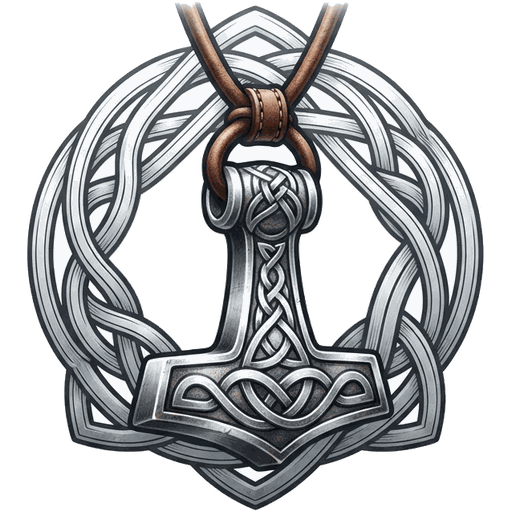


The Celtic cross has existed for centuries, but its exact origins remain a mystery. Although it is commonly associated with Christianity, the Celtic cross actually predates Christianity and has strong cultural and historical ties to the Celts.
It is a widely used Viking sign today in various parts of the world, so let’s explore its fascinating history in detail.
Origin and History of the Celtic cross
The Celtic cross has come a long way since its creation in the 7th century. It appeared among various Celtic tribes in Brittany, most likely following migrations from the British Isles.
The traditional design consists of a circle connecting four arms, although it has varied over time and across cultures.
Some scholars believe that the circle was originally used to hold the branches together, but that it later became purely decorative.
Celtic crosses were popular monuments created in the Middle Ages by Irish communities and served as gathering places for people.
These crosses reached their peak popularity between 830 and 1150 AD, a time when they could be found everywhere in Ireland and England, on both churches and tombstones.

@renzorich
The crosses of Kells and Muiredach are two of the most famous Celtic crosses, both located in Ireland. The Cross of Kells is a magnificent illustration of 10th-century Celtic art, while the Cross of Muiredach displays carvings of scenes from the Old and New Testaments on its surface.
The oldest known examples of the Celtic cross date back to the 5th century in Ireland. At that time, it was often used as a religious symbol by early Celtic Christians to represent their faith.
Indeed, the circle surrounding the cross represented eternity, an important concept in the Christianity of that time.
The symbol eventually spread beyond Ireland, becoming popular in Great Britain and Europe during the Middle Ages. It was particularly prized by knights, who wore it on their armor or shields as a sign of faith and loyalty to God and their country.

@ceridwenelizabethmckenna
Meaning and symbolism:
The Celtic cross symbolizes many different things, depending on the context in which it is used. Its primary meaning, however, is that of a religious or spiritual symbol.
For example, early interpretations of the Celtic cross saw in the ringed cross the four major stages of a day: morning, noon, evening, and midnight.
This represented the cycle of life itself, from birth to death and rebirth, as well as eternity and eternal life.
The four branches are often interpreted as representing the four cardinal directions or the four seasons. The circle in the middle can represent eternity, knowledge, or even the sun, moon, and stars.

@kgoodwinphoto
In other interpretations, it may have a connection to the planets, with each branch symbolizing a different planet in our solar system.
It is also implied that each part of the cross possesses its own spiritual core and power; for example, when used in rituals and spells, it can represent spiritual protection.
Furthermore, Celtic symbolism attributes three circles that signify the three different levels of the universe: chaos (Keugant), the earthly world (Abred), and the light/final circle (Gwenwed).
Another interpretation associates these four poles with the cardinal points (north, south, east, and west), the four elements (Earth, Air, Water, and Fire), or even the four seasons.
Modern uses of the symbol
In modern times, many people still consider the Celtic cross to be a simple Irish cultural icon or a religious symbol associated with Christianity. However, it has also been adopted by other cultures and religions.
For example, some Native American tribes have adopted it as a spiritual symbol representing the unity between man and nature.
It has also been used in various forms of art, such as jewelry design and tattoos, and appears on flags and other national symbols in countries like Scotland, Wales, and Cornwall.
The Celtic cross is a powerful symbol, rich in history and deep spiritual meaning.
Today, it is used both as a religious symbol and an expression of cultural identity by people all over the world.
As we learn more about its past, this symbol continues to inspire us and remind us of our own connections to faith, culture, and eternity.
The Celtic cross has existed for centuries, but its exact origins remain a mystery. Although it is commonly associated with Christianity, the Celtic cross actually predates Christianity and has strong cultural and historical ties to the Celts.
It is a widely used Viking sign today in various parts of the world, so let’s explore its fascinating history in detail.
Origin and History of the Celtic cross
The Celtic cross has come a long way since its creation in the 7th century. It appeared among various Celtic tribes in Brittany, most likely following migrations from the British Isles.
The traditional design consists of a circle connecting four arms, although it has varied over time and across cultures.
Some scholars believe that the circle was originally used to hold the branches together, but that it later became purely decorative.
Celtic crosses were popular monuments created in the Middle Ages by Irish communities and served as gathering places for people.
These crosses reached their peak popularity between 830 and 1150 AD, a time when they could be found everywhere in Ireland and England, on both churches and tombstones.
@renzorich
The crosses of Kells and Muiredach are two of the most famous Celtic crosses, both located in Ireland. The Cross of Kells is a magnificent illustration of 10th-century Celtic art, while the Cross of Muiredach displays carvings of scenes from the Old and New Testaments on its surface.
The oldest known examples of the Celtic cross date back to the 5th century in Ireland. At that time, it was often used as a religious symbol by early Celtic Christians to represent their faith.
Indeed, the circle surrounding the cross represented eternity, an important concept in the Christianity of that time.
The symbol eventually spread beyond Ireland, becoming popular in Great Britain and Europe during the Middle Ages. It was particularly prized by knights, who wore it on their armor or shields as a sign of faith and loyalty to God and their country.
@ceridwenelizabethmckenna
Meaning and symbolism:
The Celtic cross symbolizes many different things, depending on the context in which it is used. Its primary meaning, however, is that of a religious or spiritual symbol.
For example, early interpretations of the Celtic cross saw in the ringed cross the four major stages of a day: morning, noon, evening, and midnight.
This represented the cycle of life itself, from birth to death and rebirth, as well as eternity and eternal life.
The four branches are often interpreted as representing the four cardinal directions or the four seasons. The circle in the middle can represent eternity, knowledge, or even the sun, moon, and stars.
@kgoodwinphoto
In other interpretations, it may have a connection to the planets, with each branch symbolizing a different planet in our solar system.
It is also implied that each part of the cross possesses its own spiritual core and power; for example, when used in rituals and spells, it can represent spiritual protection.
Furthermore, Celtic symbolism attributes three circles that signify the three different levels of the universe: chaos (Keugant), the earthly world (Abred), and the light/final circle (Gwenwed).
Another interpretation associates these four poles with the cardinal points (north, south, east, and west), the four elements (Earth, Air, Water, and Fire), or even the four seasons.
Modern uses of the symbol
In modern times, many people still consider the Celtic cross to be a simple Irish cultural icon or a religious symbol associated with Christianity. However, it has also been adopted by other cultures and religions.
For example, some Native American tribes have adopted it as a spiritual symbol representing the unity between man and nature.
It has also been used in various forms of art, such as jewelry design and tattoos, and appears on flags and other national symbols in countries like Scotland, Wales, and Cornwall.
The Celtic cross is a powerful symbol, rich in history and deep spiritual meaning.
Today, it is used both as a religious symbol and an expression of cultural identity by people all over the world.
As we learn more about its past, this symbol continues to inspire us and remind us of our own connections to faith, culture, and eternity.
Ähnliche Produkte
-

Baum des Lebens Halskette – Ahnenflüstern
63,99 € 🛒 Dieses Produkt weist mehrere Varianten auf. Die Optionen können auf der Produktseite gewählt werden -

Baum des Lebens Halskette – Blätter des Schicksals
53,99 € 🛒 Dieses Produkt weist mehrere Varianten auf. Die Optionen können auf der Produktseite gewählt werden -

Baum des Lebens Halskette – Echo der Ahnen